
Alchemist Artist · Art and activism
The Portrait of Imperialism Project
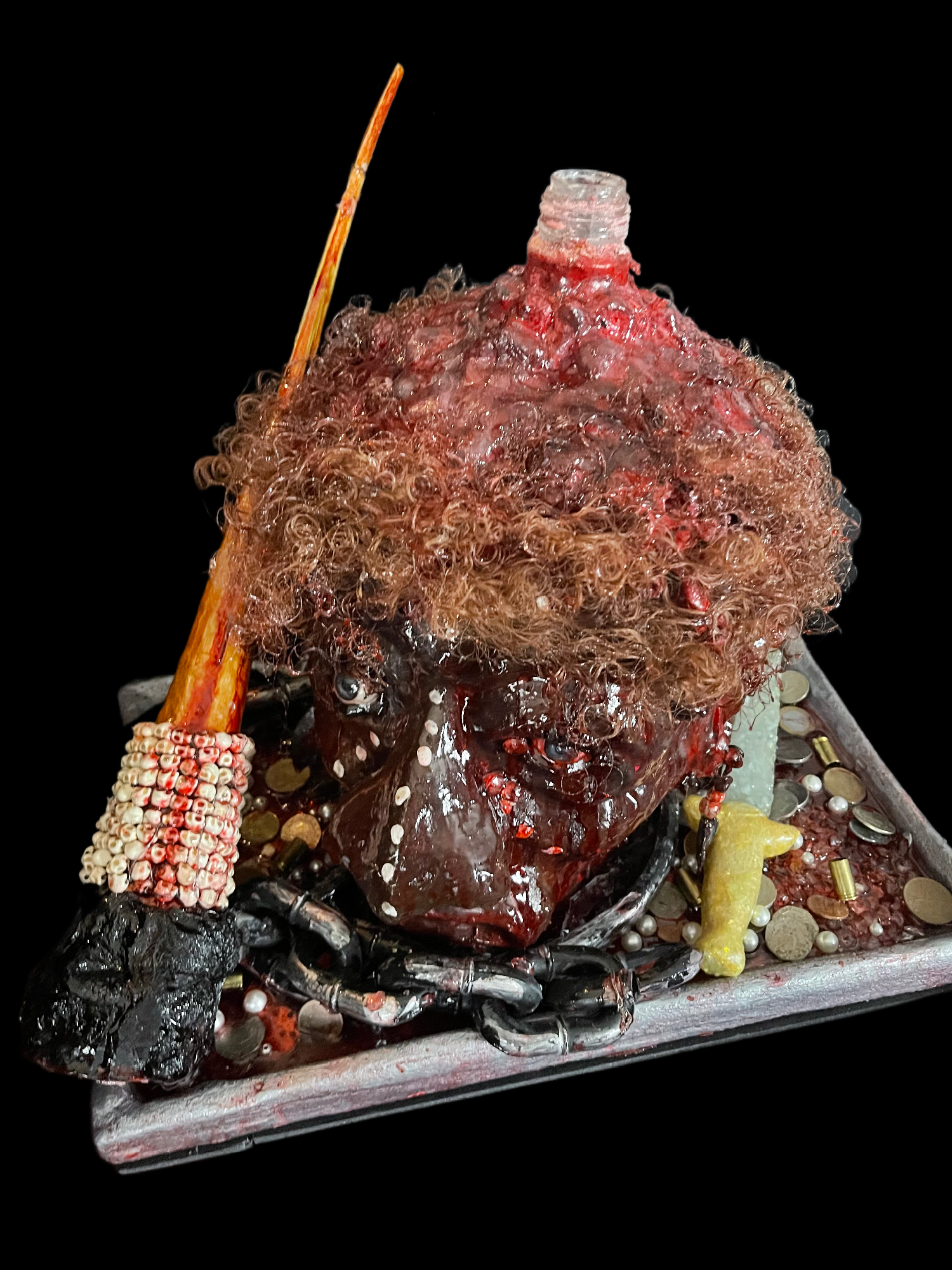
What happens when a person becomes a possession? When a culture becomes an obstacle to someone else’s wealth? The Portrait of Imperialism Project confronts those questions through sculpture, texture and deliberately unsettling imagery.
I created this series to explore the violence of turning human beings, land and culture into commodities. Its imagery is disturbing because its subject is disturbing. I want viewers to pause long enough to consider the people whose suffering sits beneath stories of conquest, prosperity and power.
A human life, presented as property
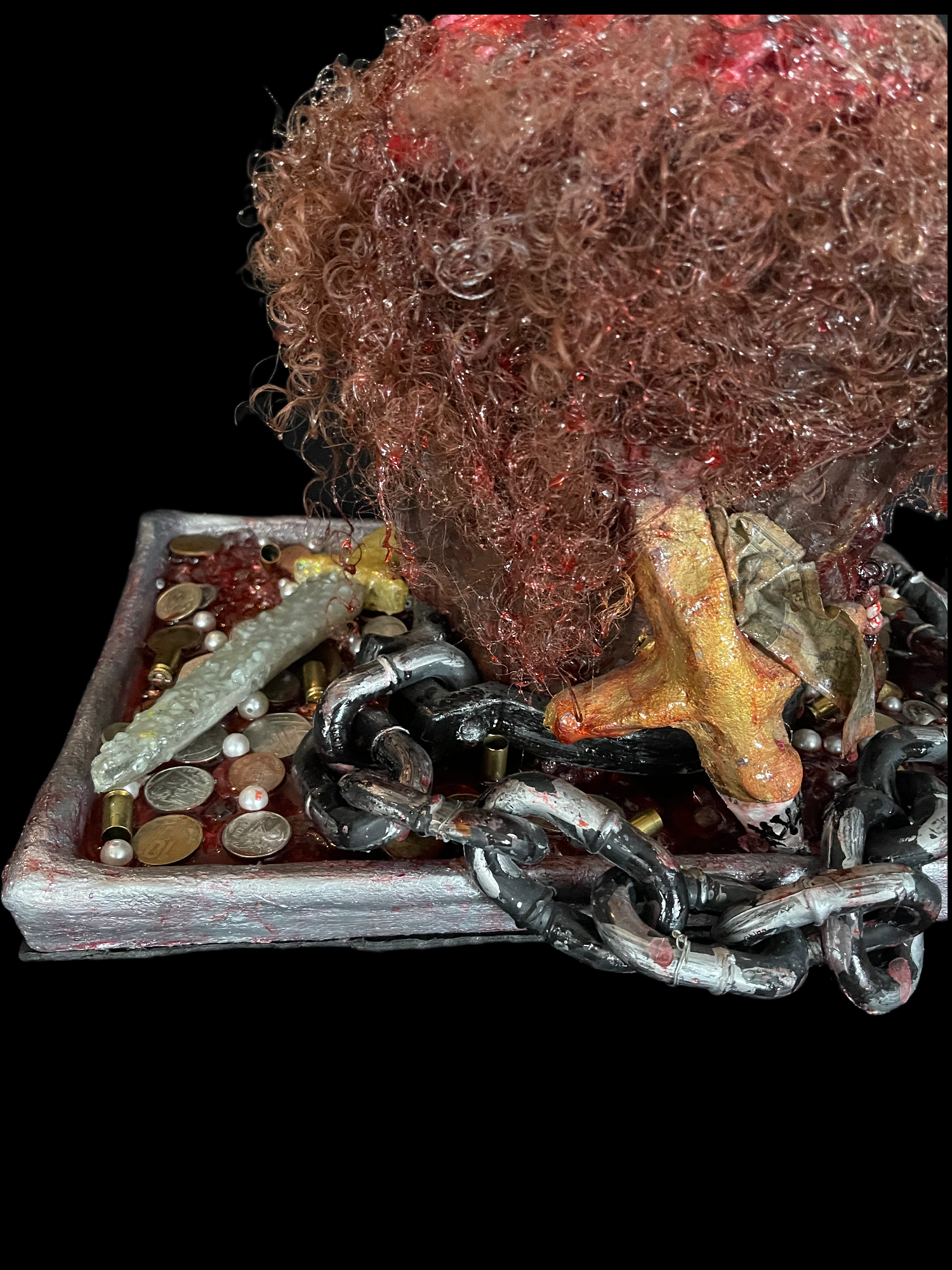
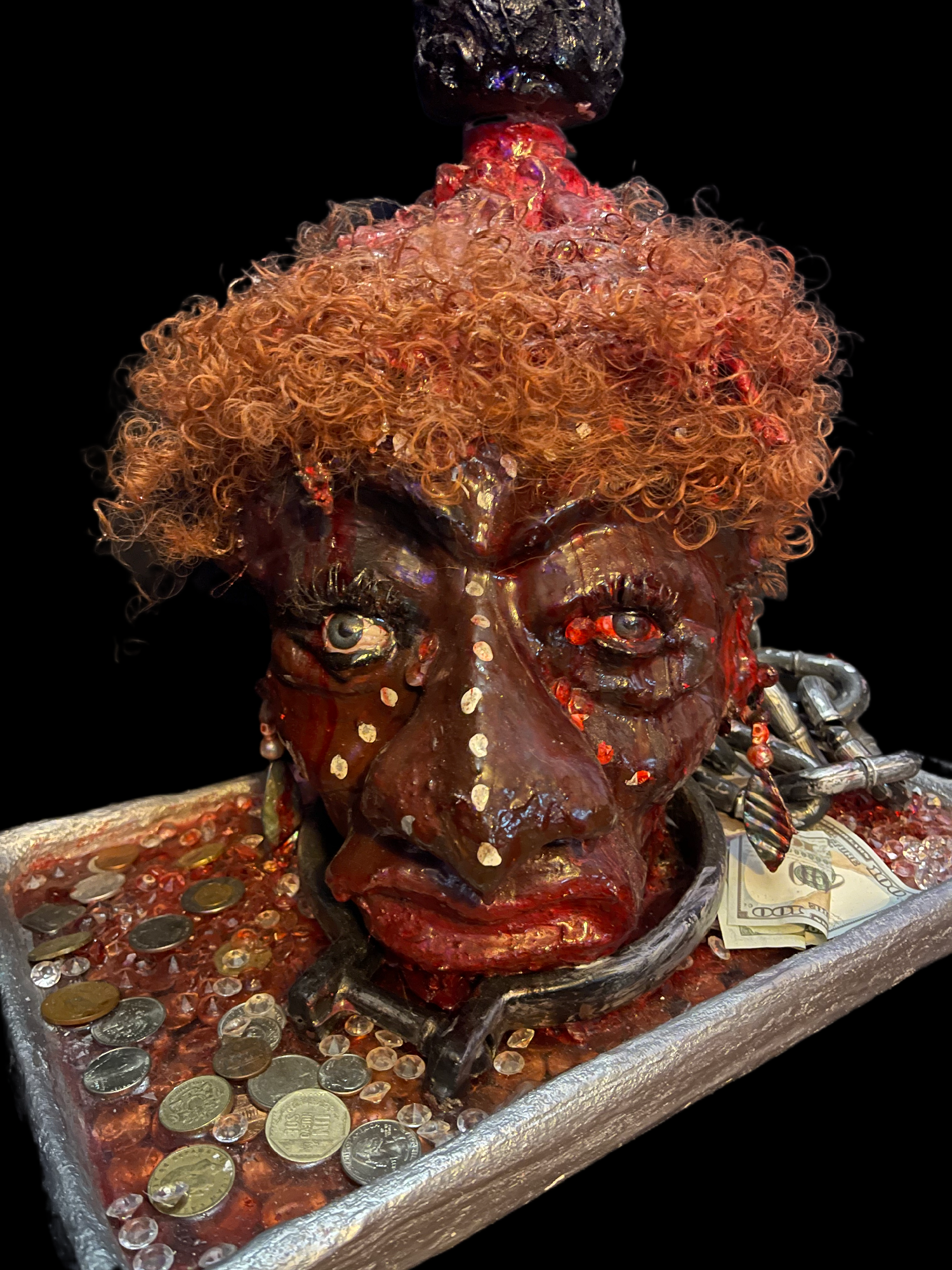
At the center of this project is a sculpture resting on a silver tray, surrounded by coins and gemlike fragments. That arrangement matters. A tray presents something for someone else’s use. Coins suggest a price. Together, they place the human figure inside a visual language of ownership and exchange.
The tension between ornament and horror is intentional. The surrounding objects offer the appearance of wealth, while the figure asks what that wealth has cost. Who is allowed to possess? Who is forced to become the possession? What disappears when a person is reduced to what someone else can extract from them?
Building the story through materials
The broader series brings together sculptures and canvases made with resin, latex, wood, gemstones, plaster, glass and mica. These materials let me work across contrasting surfaces, from reflective and decorative elements to rough, uneven textures.
Those contrasts give the subject a physical presence. You can follow a contour, examine a surface or move around a sculpture and encounter another part of the work. Looking from different angles becomes part of reading it. The piece asks for attention beyond a single photograph or a passing glance.
Imperialism beyond the moment of conquest
My focus is the human cost of domination: the taking of land, the treatment of people as property and the pressure placed on communities to surrender their identities. The project connects slavery and colonial violence with questions about whose lives are valued and whose experiences are pushed aside.
I do not intend one sculpture to speak for every affected community. It is my artistic response to these subjects, and an invitation to listen more closely to the people and histories behind them. Empathy begins with recognizing that a life cannot be measured by its usefulness to someone else.


The story that accompanies the sculpture
Art Stories: Portrait of Imperialism approaches the project through an imagined narrative of invasion, conflict and captivity. It gives the work a literary companion, exploring greed, betrayal and the loss of home through fiction.
Read it alongside the sculpture as another artistic interpretation of the project’s themes. The narrative is a creative work rather than a documented account of a particular people or historical event.
Staying with the difficult questions
This project asks viewers to sit with discomfort and examine what produces it. The imagery may be difficult to look at. The questions it raises deserve that attention: whose suffering is concealed by displays of wealth, whose stories survive, and what does it mean to recognize someone’s full humanity?
For me, The Portrait of Imperialism Project is a refusal to let decoration make exploitation look harmless. Behind every object treated as a trophy is the possibility of a life, a home or a history that someone else was forced to surrender.